Mile Five: Where Past Meets Progress
By Luke Carothers
In the beginning, everything feels like a departure, but, somewhere along the way, that feeling changes as the road becomes familiar. And as summer begins to fade, the landscape starts offering small reminders that the journey doesn’t last forever.
For the penultimate leg of our 2026 Rising Stars Road Trip, we turn towards the Midwest as we trace a route between bodies of water and the communities along them. We’ll begin along the Ohio River in Cincinnati before pushing north and west through Indianapolis and Detroit before eventually arriving on the shores of Lake Michigan in Chicago.
Across those miles, we’ll see another side of the built environment and the people shaping it. Old factories being given new purposes, massive construction projects rising in the heart of cities, and the challenge of mapping and repairing aging infrastructure—there are still plenty of miles left in the tank.
The Queen City, Reimagined
Our first stop sits along the Ohio River, where Cincinnati grew into one of America’s earliest boomtowns. River and canal traffic along with the resulting thriving industrial economy helped it earn the nickname the “Queen City.” The factories that now remain are reminders of that era, and many of them are now finding new lives.
The former LeBlond Milling Machine Factory is now the site of a complex brownfield redevelopment led in part by Rising Star Tyler Amicon. As Project Manager and Design Lead, Amicon is helping transform the historic property into 250 multifamily apartments, combining renovation of existing structures with new construction. The project is supported by Ohio Department of Development grant funding through the Ohio EPA VAP program.
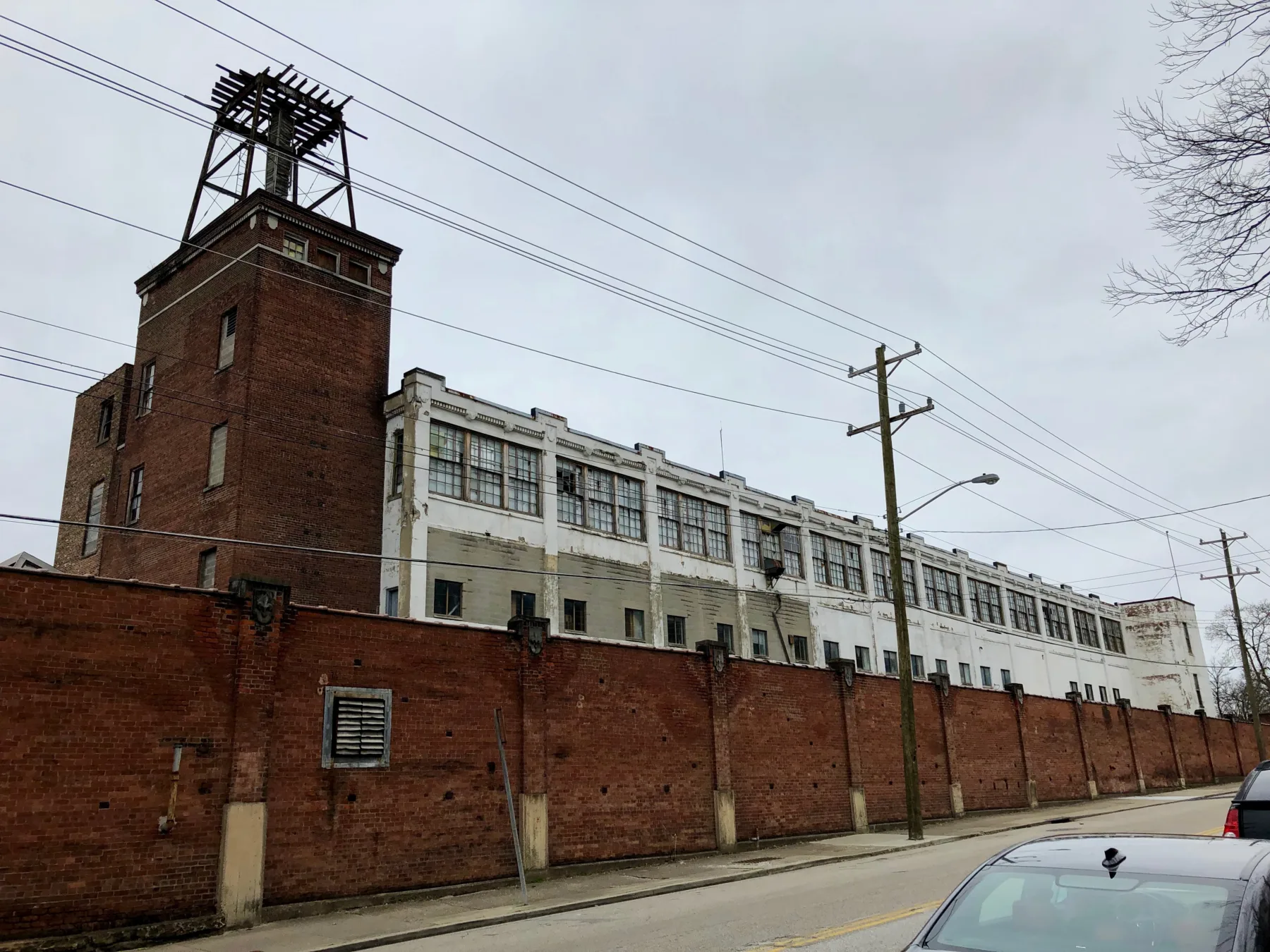
It’s the kind of complicated assignment that fits comfortably with Amicon’s unusually broad workload. At any given time, he manages 25 to 30 active projects while coordinating teams across civil, surveying, ecological, environmental, geotechnical, and other disciplines. In Greater Cincinnati alone, his work includes several 200- to 300-unit multifamily developments.
At the Milling Machine Factory site, that experience is being applied to a place where Cincinnati’s industrial past and its present-day occupy the same ground. Rather than wiping the slate clean, the redevelopment is finding another use for a property that has been part of the city for nearly a century and a half.
That sense of change follows us out of the city as we turn northwest and trade Cincinnati’s dense urban landscape for interstate and open fields where crops hang heavy in anticipation of the coming harvest. A few hours up the road, we find ourselves in another Midwestern city built around movement and connection.
A New Crossroads for Care
From its start, Indianapolis was built to be connected. Its central location was chosen with commerce and industry in mind, and transportation has shaped the city ever since. Over the years, nicknames like the Railroad City, the Crossroads City, and the Racing Capital of the World have reflected different versions of the same idea. Indianapolis is a place defined by movement.
Today, one of the biggest projects in the country is taking shape near its center. Rising Star Shubham Gadekar is currently serving as Lead BIM Manager on the $4.3 billion Indiana University Health Hospital project in downtown Indianapolis, which is the largest healthcare construction project currently underway in the United States. Across 2.7 million square feet, Gadekar coordinates with more than 150 stakeholders spanning architectural, structural, and MEP disciplines.
At that scale, coordination becomes infrastructure of its own. Gadekar managed the full BIM execution lifecycle, from initial model setup through construction coordination. He implemented COBie workflows to prepare asset information for eventual handover into the owner’s facility management systems and established coordination protocols adopted across the project team. The result was a common framework for hundreds of moving pieces on a project where small disconnects quickly become expensive problems.
The hospital itself represents a major shift in healthcare for the region. Set within a 44-acre academic medical campus, the new facility will consolidate Methodist and University hospitals into a single destination for acute adult care. Its scheduled opening in late 2027 will mark the culmination of year of design, construction, and coordination.
From a project measured in millions of square feet, we set out north towards infrastructure measured in other ways. Leaving Indianapolis behind, our route bends towards Michigan, and the first of our Great Lakes stops.
Building From Below
Detroit has never been shy about moving first.
The first mile of paved road in the United States opened here in 1909. The first tri-colored traffic light followed in 1920, and the country’s first expressway arrived a little more than two decades after that. For a city synonymous with firsts, progress has often been something happening right in front of you, but some of the most important progress into the future is happening underground.
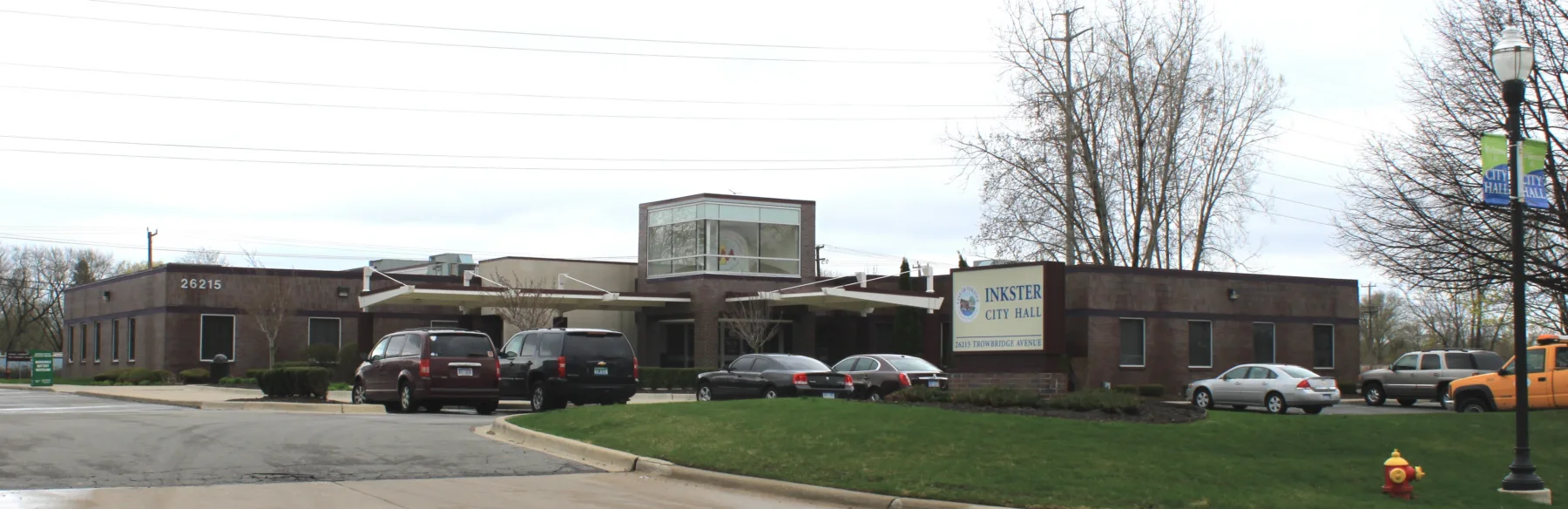
Just west of Detroit, Rising Star Brent Kraft works with the City of Inkster, an underserved community managing an extensive network of aging infrastructure. In 2016, the city secured a stormwater and wastewater asset management grant that allowed Kraft and his team to assess roughly one-third of Inkster’s half-million feet of wastewater collection assets and develop recommendations for replacement or rehabilitation over a 20-year period.
The assessment was only the beginning. Its success helped turn a grant-funded effort into a sustained commitment, with the city funding a $3 million infrastructure project each year. Kraft and his team are now beginning phase six, working alongside elected officials and Department of Public Services staff on everything from asset management to budgeting and rate setting.
That long view is central to Kraft’s work across southeast Michigan. Much of his career has been spent helping underserved municipalities where infrastructure can be more than a century old, and resources are often limited. His approach puts him inside the communities he serves, working directly with local officials to understand what they need and finding the funding to help make it possible.
From Detroit, we turn west and cross Michigan. The miles eventually carry us to the opposite short, where Lake Michigan comes into view and water takes center stage once again.
Systems in Motion
Water has always dictated where cities grow and how they move. Around Chicago, that relationship has often been complicated. The region sits along a subtle continental divide, making the direction, treatment, and management of water a constant concern. As communities have grown, so have the systems required to collect, move, and treat what flows through them.
That brings us to Elmhurst, just west of Chicago, where Rising Star Mark Gockowski is helping prepare one of those systems for its next chapter.
As Project Manager for the Elmhurst Water Reclamation Facility Bundle 5 Improvements, Gockowski guided design efforts for a $32.3 million program aimed at improving current operations while preparing the facility for future biological nutrient removal. The work reaches across the treatment process, including clarifier rehabilitation, improved flow distribution, new return activated sludge pumping, updated disinfection systems, and renovations throughout the facility.
That engineering is only part of the equation. Gockowski also helped the city pursue IEPA loan funding and ComEd energy-efficiency incentives, finding ways to maximize the financial benefits of improvements that will serve the community well beyond their completion. It reflects the broader scope of his work, which includes wastewater treatment, conveyance, asset management, and master planning efforts serving more than 100 communities.
One More Stretch
Across this leg of the journey, progress rarely meant starting from scratch. It meant finding a new purpose for a factory. It meant coordinating millions of square feet of new healthcare infrastructure. It meant building a decades-long plan for wastewater systems beneath an underserved community, and it meant preparing a water reclamation facility for demands still coming down the line.
Different places require different answers, but each of these Rising Stars is working with a longer horizon in mind. Their impact is measured not only by what gets built today, but by how well communities are positioned for tomorrow.
Five legs down. One to go.
source https://zweiglist.com/mile-five-where-past-meets-progress/
تعليقات
إرسال تعليق